
Floating wind energy is electricity generated by wind turbines mounted on buoyant platforms that are held in place by mooring lines and anchors, rather than fixed directly to the seabed. That one design change opens up ocean areas that traditional fixed-bottom turbines can’t reach, including deep waters where winds tend to be stronger and steadier.
Why does that matter? Much of the world’s best offshore wind resource sits over water too deep for fixed foundations. Floating technology lets clean power be generated farther from shore, where turbines are less visible from land and can tap consistent winds, all while supporting cleaner air and lower emissions for the communities that benefit from the electricity.
This article explains how floating wind works in plain terms, the main platform types and what sets them apart, and where the technology is being used. We also look at how a floating project moves from early planning through construction and operation. Wind Unites Us has been a pioneer in this space, and our work alongside trusted engineering, marine, and supply chain partners shapes the practical perspective you’ll find throughout. Whether you represent a utility, a government agency, or simply care about where your energy comes from, you’ll find clear answers here.
What Floating Wind Energy Means
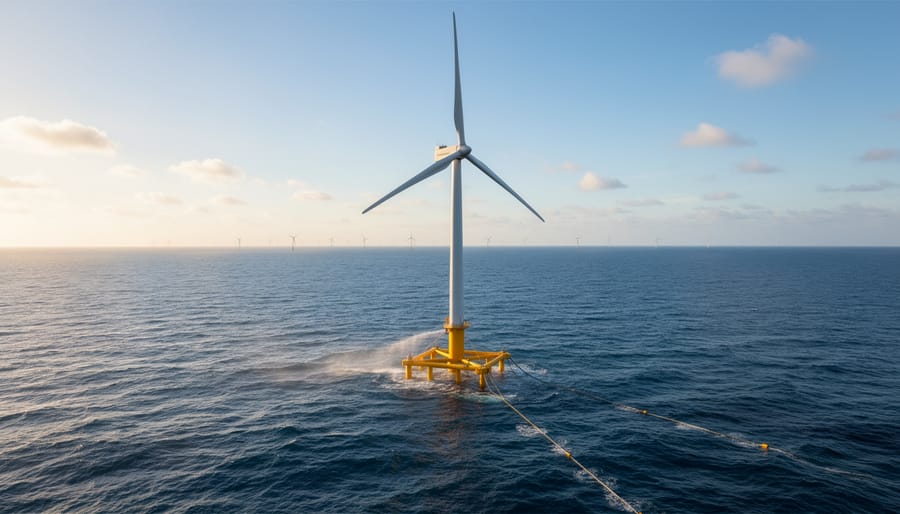
Floating wind energy is the process of generating electricity from wind turbines mounted on buoyant platforms that are held in place by lines anchored to the seabed. The turbine itself works the way any offshore turbine does. What changes is the foundation beneath it.
Traditional fixed-bottom offshore wind relies on a structure driven or fixed directly into the seabed, which works well in shallow water. Floating designs simply replace that rigid base with a stable, moored platform. Neither approach is better or worse in quality. They are two foundation choices suited to different ocean conditions.
That difference matters because many of the strongest wind resources sit in deeper water. Farther from shore, winds tend to be stronger and steadier, which can lift a project’s capacity factor a measure of how much of its maximum potential a turbine actually delivers over time. Floating technology also opens coastlines where the seabed drops away quickly and traditional foundations aren’t practical.
A few terms come up often when people explore this technology:
- Floating platform
- The buoyant structure that supports the turbine and keeps it upright on the water.
- Mooring lines
- Strong cables or chains that connect the platform to the seabed and hold it in position.
- Anchors
- Heavy devices placed on or in the seabed that secure the mooring lines.
- Dynamic cable
- A flexible subsea power cable designed to move with the platform while carrying electricity toward shore.
- Nacelle
- The housing at the top of the tower that contains the generator and other key equipment.
- Capacity factor
- The share of a turbine’s maximum possible output that it produces over a given period.
Seen this way, floating wind is a natural next step in the growth of wind power. It builds on proven turbine technology and extends clean energy generation to places that were once out of reach, giving more communities a chance to benefit from the ocean’s wind.
How Floating Offshore Wind Works
From Wind to Electricity at Sea
Out at sea, a floating wind turbine works much like its land-based cousins. Wind pushes against the long blades, which are shaped to catch moving air and turn a central rotor. That rotation drives a generator inside the nacelle, the housing at the top of the tower, and the generator converts mechanical motion into electricity. Sensors and control systems constantly adjust the blade angle and the direction the turbine faces so it captures as much wind as possible while staying safe in stronger gusts.
Once the electricity is produced, it has to reach people on land. Power travels down the tower and into a dynamic subsea cable. Unlike cables laid on a fixed foundation, these are built to flex gently with the movement of the floating platform, so they can handle the rise and fall of the waves without strain.
The cable runs along the seabed to a landing point on the coast, then connects to the onshore grid. From there, utilities carry the clean power through their networks to homes, schools, and businesses.
Staying Steady: Platforms and Moorings
A floating turbine stays upright thanks to three working together: buoyancy, ballast, and mooring.
Buoyancy is the simple part. The platform is built so that the water it displaces weighs as much as the whole structure, turbine included, much like a ship staying afloat. Ballast then gives the platform its stability. Heavy material, often water or solid weight placed low in the structure, pulls the center of gravity down so the tower resists tipping, the same way a keel steadies a sailboat.
Mooring is what holds the platform in place. Strong lines run from the platform to anchors on the seabed, and they keep the turbine within a small, planned area even as waves roll through and wind pushes on the blades. The lines are designed with a little give, which lets the platform move gently with the sea rather than fight it.
This engineering is central to the technology. A turbine that rides steadily produces power reliably, and a well-moored platform keeps the connection to its subsea cable secure. That is why careful site assessment and thoughtful design matter so much on every floating project.
Types of Floating Platforms and Key Components
Spar-Buoy, Semi-Submersible, and Tension-Leg Designs
Floating wind platforms come in three main designs, and each keeps a turbine steady in a different way.
A spar-buoy is a long, slender cylinder that floats upright, with most of its length hanging deep beneath the surface. Heavy ballast sits at the bottom, which pulls the center of gravity low and keeps the structure naturally upright, much like a weighted fishing float. Spars tend to suit deeper waters, since they need plenty of depth beneath them, and they are valued for their simple shape.
A semi-submersible rests on several large columns joined together, with most of its buoyant volume just below the waterline. Its wide footprint spreads out the forces of waves and wind, giving it a stable, balanced stance. Because it sits relatively shallow in the water, a semi-submersible can be assembled at a port and towed out whole. That flexibility makes it a good match for a wide range of sites and depths.
A tension-leg platform takes a different approach. A buoyant structure is held taut by vertical tendons anchored firmly to the seabed. The tight lines limit movement, so the platform stays remarkably still. This design uses less steel and a smaller footprint, and it works well where seabed conditions support strong anchoring.
Choosing among these designs depends on water depth, seabed conditions, and local port facilities, which is why careful site assessment comes first.
Anchors, Mooring Lines, and Subsea Cables
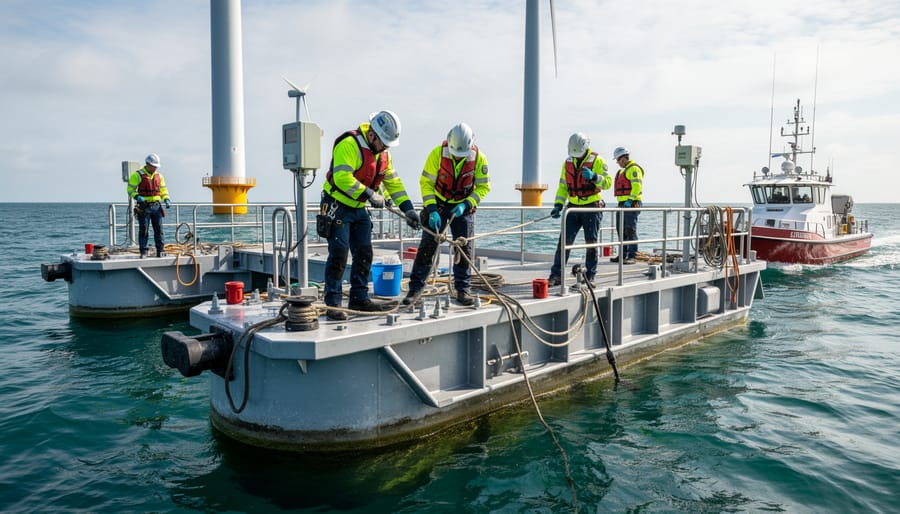
Every floating turbine depends on three supporting systems that work together: anchors, mooring lines, and subsea cables.
Anchors fix the whole arrangement to the seabed. Depending on what lies beneath the water, developers choose drag-embedment anchors that dig into soft sediment, driven or suction piles that hold in firmer ground, or heavy gravity anchors that rely on their own weight. The seabed itself decides which option makes sense.
Mooring lines run from the platform down to those anchors. Made from chain, synthetic rope, or a combination of both, they keep the platform within a small, safe range of movement while still letting it flex with the waves. That flexibility is deliberate, since a mooring that is too rigid would carry far more stress.
Power leaves the turbine through dynamic subsea cables. These are built to bend and move with the platform rather than stay fixed in place, then connect to export cables that carry electricity to shore and into the grid.
Because each component has to suit its specific site, careful seabed surveys, environmental assessment, and well-run project management matter just as much as the hardware. Getting those early decisions right helps projects perform reliably for decades.
How Floating Wind Is Used and Why It Matters
Floating wind turns open water, once out of reach for conventional foundations, into a source of clean electricity. Because the platforms float, developers can place turbines where the wind is strongest and steadiest, then send that power ashore to the communities and utilities that need it. For coastal regions with deep waters close to the shoreline, that is a significant opening.
Here are the main ways floating wind is put to work and the benefits it brings:
- Powering coastal communities with locally generated clean electricity.
- Supplying utilities with dependable power that feeds directly into the regional grid.
- Expanding wind access in deep-water areas where fixed foundations aren’t practical.
- Fostering new construction, port, and maintenance jobs close to home.
Each of these points back to the same idea: more places can now contribute to a cleaner energy supply. Utilities gain another source of power to balance their portfolios, and a more varied mix of generation makes the grid more resilient. Wind farms located well offshore can also tap into winds that tend to be stronger and more consistent than those closer to land, which means more reliable output over time.
The economic ripple effects matter just as much. Floating projects call for assembly at port, specialized vessels, skilled technicians, and long-term upkeep, all of which can bring steady work to coastal towns. Ports that once relied on a single industry can find a new role supporting the growing clean energy sector.
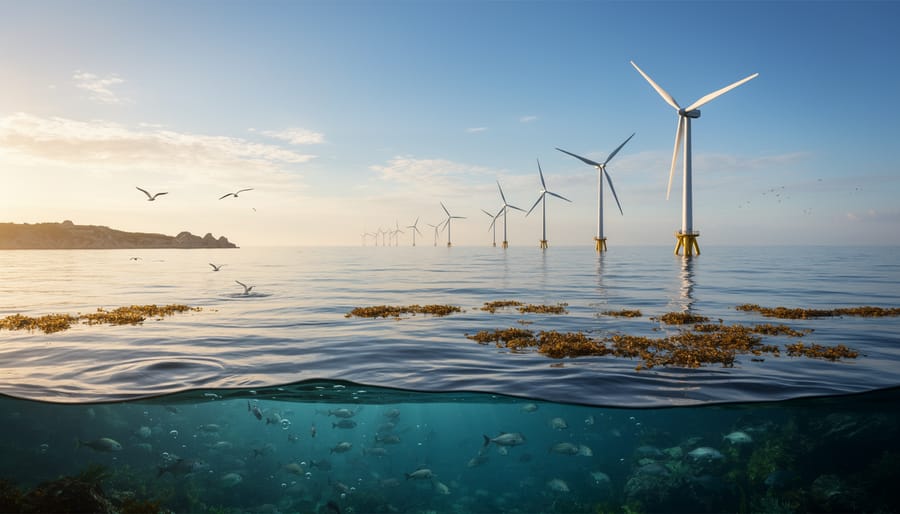
The environmental case is at the heart of it. Every megawatt-hour generated by wind is clean power generation with no emissions at the point of production, helping communities move toward a lower-carbon energy mix. Responsible development also means taking care of the ocean itself. Careful site assessment, thoughtful planning, and ongoing monitoring help protect marine habitats, migration routes, and fishing activity, so the benefits of floating wind can grow in step with healthy coastal ecosystems.
Building and Maintaining Floating Wind Projects
Every floating wind project begins long before a turbine reaches the water. Developers start with site selection, studying wind resource, water depth, seabed conditions, and nearby ports and grid connection points. From there, the real planning gets underway. Projects must satisfy regulatory requirements at multiple levels, along with environmental reviews that look closely at marine habitats, wildlife, and shipping routes. Onshore elements, such as cable landing points and substations, often depend on securing zoning permits well ahead of construction.
Once approvals are in place, the work shifts to the port. Floating platforms and turbines are typically assembled dockside, where cranes and calm water make the job safer and more efficient. Completed units are then towed out to the site, connected to pre-installed anchors and mooring lines, and linked to the subsea cable that carries power to shore. It’s a different rhythm from fixed-bottom projects, with much of the heavy lifting done in sheltered water rather than offshore.
After commissioning, ongoing maintenance keeps everything performing. Crews inspect blades, moorings, and cables on a regular schedule, and some major repairs can even be handled by towing a unit back to port.
Behind all of this is careful coordination. Since 2004, Wind Unites Us has built its reputation on project management and regulatory compliance, and that experience reflects a simple truth: successful projects depend on developers, utilities, government bodies, and property owners working toward the same goal from day one.
Floating Offshore Wind: Common Questions
Floating offshore wind raises a lot of natural questions, and the answers are reassuring. Here are the ones readers ask most often.
How is floating wind different from fixed offshore wind?
The difference is the foundation. Fixed turbines are anchored directly into the seabed, while floating turbines sit on buoyant platforms held in place by mooring lines, which lets them operate in deeper water.
How do floating turbines stay in place?
Mooring lines connect each platform to anchors on the seabed, while the platform’s buoyancy and ballast keep the turbine upright. This design lets the structure stay steady through changing wind and waves.
How does floating wind affect marine life?
Like any offshore project, floating wind calls for careful site assessment and environmental review before construction begins. Developers work with regulators to study local ecosystems and plan accordingly, so clean power and healthy seas can go hand in hand.
Can floating wind power homes on the mainland?
Yes. Electricity travels through flexible subsea cables to the onshore grid, where utilities deliver it to homes and businesses just like power from any other source.
Floating wind is not meant to replace everything else. It is a natural addition to a diverse energy mix that includes other clean energy sources, helping coastal communities tap strong, steady winds that were once out of reach. As a pioneer in wind energy since 2004, Wind Unites Us is excited to see this technology open new possibilities for clean power.
Floating offshore wind opens a new chapter for clean power. By placing turbines on buoyant platforms anchored in deep water, it reaches strong, steady winds that were once out of range, and it brings renewable electricity to coastlines that fixed foundations could never serve. Along the way, it offers cleaner air, new local jobs, and a more diverse, resilient energy mix.
At Wind Unites Us, we’ve been part of the wind story since 2004. Over those years, we’ve built 139.2 MW of installed capacity, and we carry that hands-on experience into every new frontier, including the floating one.
Technology alone doesn’t power a community, though. Success depends on strong partnerships among utilities, government bodies, and property owners, all working toward the same goal of reliable, responsible clean energy.
If you’re curious about what wind can do for your community, your organization, or your land, we’d love to talk. Explore clean wind energy solutions with Wind Unites Us, and help shape the next generation of renewable power.