
Kansas stands today as a national leader in wind energy, with 6,100 megawatts of installed generating capacity powering homes, businesses, and industries across the state. Ranked second in the nation for share of wind power generation and fourth in total wind energy production, Kansas transformed its sweeping plains into one of America’s most productive clean energy landscapes. In May 2026 alone, the state generated 2,602 thousand megawatt-hours of wind energy, proving that renewable infrastructure delivers consistent, measurable results.
The state’s wind energy success stems from an ideal combination of geography, forward-thinking policy, and strategic partnerships between developers, landowners, and utilities. Projects like the 650-megawatt High Banks Wind Farm in Washington and Republic counties demonstrate the scale and sophistication of Kansas installations, bringing substantial economic benefits to rural communities while advancing clean energy goals. These facilities don’t just generate electricity. They create long-term revenue for property owners, jobs for local workers, and a cleaner energy grid for all Kansans.
Understanding Kansas’s wind power infrastructure means looking beyond simple capacity numbers to the real-world impact of these installations. From the development process that brings turbines online to the ongoing benefits they provide, wind energy represents a proven solution that combines environmental responsibility with economic opportunity. The state’s leadership position reflects decades of commitment to renewable energy, positioning Kansas as a model for other states pursuing their own clean energy transitions.
Kansas’s Wind Power Leadership: The Numbers Behind the Success
Kansas stands among America’s wind energy powerhouses with 6,100 megawatts of installed capacity generating electricity across the prairie landscape. This substantial infrastructure places the state second in the nation for wind power’s share of total electricity generation, a remarkable achievement that reflects both the state’s exceptional wind resources and its commitment to renewable energy development. In May 2026 alone, Kansas wind turbines produced 2,602 thousand megawatt-hours of clean electricity, ranking fourth among all states for wind energy production that month.
These numbers tell a story that extends beyond raw statistics. The state’s second-place ranking for generation share means wind power supplies a larger percentage of Kansas’s electricity needs than nearly any other state achieves. While larger states might generate more total wind energy, Kansas has woven wind power into the fabric of its energy grid more thoroughly than most. This integration demonstrates that wind isn’t just supplemental here, it’s foundational to how Kansas powers homes, businesses, and industries.
The 2,602 thousand megawatt-hours generated in a single month represents enough electricity to power hundreds of thousands of homes. That May 2026 production figure, which secured Kansas’s fourth-place national ranking, illustrates the consistent output these installations deliver month after month. Unlike fossil fuel generation that requires continuous fuel supply, this electricity came from wind that swept across Kansas at no ongoing cost and with zero emissions.
Kansas’s position in the top five for total wind generation places it alongside much larger states, which speaks to the density and efficiency of installations across the state. The 6,100 MW capacity doesn’t just exist on paper. Projects like the High Banks Wind Farm in Washington and Republic counties, with its 650 MW generating capacity, represent the substantial industrial infrastructure that transforms Kansas’s natural wind resources into measurable, reliable electricity feeding the regional grid.
This leadership position didn’t emerge overnight. It reflects years of strategic development, favorable wind conditions, available land, supportive partnerships between developers and property owners, and utility infrastructure capable of integrating large-scale renewable generation. The result is a state where wind power has evolved from an alternative energy source into a mainstream pillar of the electricity supply.
Major Wind Installations Driving Kansas Forward
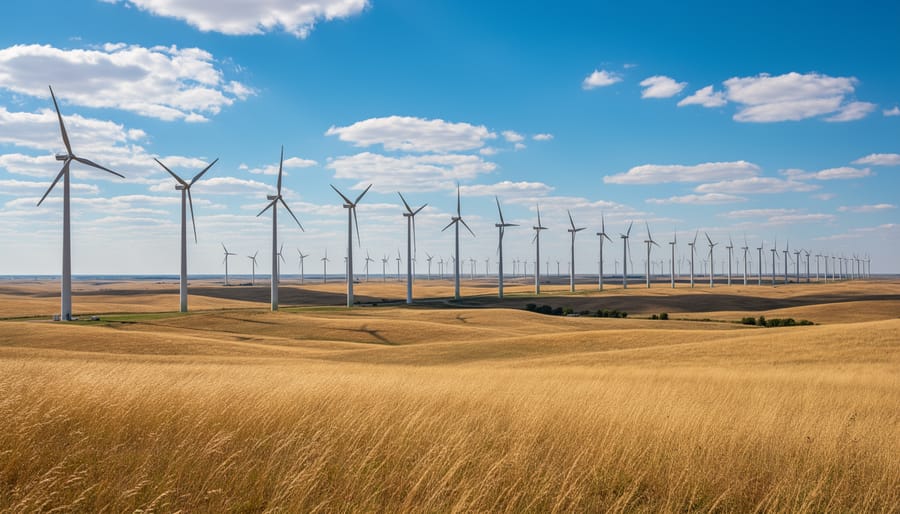
Kansas’s 6,100 MW of installed wind capacity doesn’t sit in one place. It spans dozens of installations across the state’s western, north-central, and south-central counties, where steady winds and wide-open terrain create near-perfect conditions for utility-scale generation. These projects vary in size from smaller facilities serving regional grids to massive installations that feed electricity into multi-state networks.
The High Banks Wind Farm in Washington and Republic counties stands as one of the state’s largest examples, with 650 MW of generating capacity. Located in north-central Kansas, this facility alone can power hundreds of thousands of homes while demonstrating how strategic site selection maximizes output. High Banks sits in a zone where consistent wind speeds, minimal topographical obstacles, and proximity to transmission infrastructure align to support large-scale development.
Geographic distribution matters because Kansas’s wind resources aren’t uniform. The western third of the state experiences the highest average wind speeds, making it prime territory for mega-projects. North-central regions like those hosting High Banks balance strong winds with accessible land and existing grid connections. South-central Kansas hosts clusters of installations near major transmission corridors, allowing developers to move power efficiently to demand centers.
Several factors make Kansas a national wind energy leader. The state benefits from Class 3 and Class 4 wind resources across large swaths of rural land, where property owners welcome lease agreements that provide stable income without disrupting agricultural operations. Flat to gently rolling terrain reduces construction complexity and turbine foundation costs. Established transmission infrastructure, built out over decades to serve the grid, gives developers pathways to deliver power without building entirely new lines from scratch.
Kansas’s land availability sets it apart. Agricultural landowners can lease parcels for turbines while continuing to farm around them, creating dual revenue streams. This cooperative model, combined with regulatory frameworks that support renewable development, positions Kansas to maintain its ranking among the top wind-producing states for years ahead.
How Wind Power Capacity Translates to Real-World Impact
Kansas’s 6,100 megawatts of wind capacity delivers tangible benefits that extend far beyond abstract statistics. This generating power supplies electricity to roughly 1.8 million Kansas homes, covering a significant portion of the state’s residential energy needs and providing cleaner alternatives to fossil fuel generation.
The environmental impact is substantial. Each megawatt-hour of wind energy displaces power that would otherwise come from coal or natural gas plants, eliminating hundreds of thousands of tons of carbon dioxide annually. Cleaner air follows reduced emissions, particularly benefiting communities near retired or scaled-back conventional power facilities. Kansas’s position as the nation’s #2 state for wind generation share means this environmental dividend reaches beyond state borders, contributing to regional grid decarbonization across the central United States.
Rural communities gain economic stability through multiple revenue streams. Landowners who host turbines receive long-term lease payments that supplement agricultural income, insulating farm operations from commodity price swings. Counties collect property tax revenue from wind installations, funding schools, roads, and emergency services without raising resident taxes. During construction phases, local businesses benefit from increased demand for lodging, equipment, materials, and services. Operations and maintenance create permanent skilled positions in areas where such jobs are otherwise scarce.
None of this happens in isolation. Successful wind development requires a partnership ecosystem where each participant contributes essential expertise. Developers bring technical knowledge and capital; landowners provide suitable sites and local insight; utility companies integrate new capacity into the grid infrastructure; and government bodies establish permitting frameworks that balance energy goals with community interests. This collaborative model has proven particularly effective in Kansas, where agricultural landowners understand multi-generational planning and utilities have adapted their systems to accommodate variable renewable generation.
The High Banks Wind Farm exemplifies this partnership approach. Its 650-megawatt capacity across Washington and Republic counties represents coordination between multiple stakeholders, resulting in clean energy that serves thousands of customers while supporting two rural county economies. Similar collaborations across Kansas have positioned the state as a national leader in translating wind resources into measurable, lasting community benefits.
The Development Process: From Land to Grid Connection
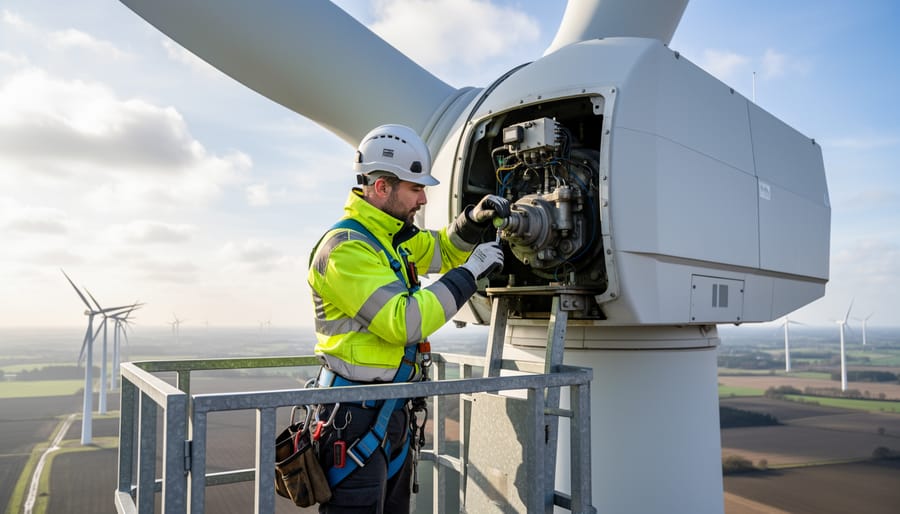
Bringing a Kansas wind farm from initial concept to delivering clean electricity requires a multi-stage journey that typically spans two to three years and demands close collaboration between developers, landowners, utilities, and local communities.
The process unfolds through distinct phases:
- Site assessment and resource evaluation: Developers analyze wind speed data, transmission proximity, and topography to identify viable locations, then approach property owners to gauge interest in hosting turbines.
- Land partnerships and agreements: Negotiations with landowners establish lease terms, including the lease acquisition fee and ongoing rental payments that provide stable income for rural families throughout the project’s 20-30 year operational life.
- Permitting and environmental review: Developers work through county zoning approvals, state permits, and federal environmental assessments covering wildlife impact, soil conservation, and cultural resources, ensuring full regulatory compliance before construction begins.
- Construction and turbine installation: Crews build access roads, pour foundations, erect towers and turbines, and install collection systems, creating temporary jobs and stimulating local economies through equipment purchases and contractor spending.
- Grid interconnection and commissioning: Electrical infrastructure connects the wind farm to utility transmission lines, followed by testing protocols that verify safe, reliable power delivery before the facility enters commercial operation.
What distinguishes successful Kansas projects is the partnership model. Developers don’t simply lease land; they integrate into communities, addressing concerns about setbacks and visual impact while sharing economic benefits. Utility companies coordinate transmission upgrades to handle new capacity. Local governments balance clean energy goals with land use priorities.
This collaborative framework explains how Kansas has scaled to 6,100 MW of installed capacity. Each megawatt represents not just technical achievement but sustained cooperation between stakeholders who recognize that wind development benefits everyone when approached with transparency, fair compensation, and shared commitment to Kansas’s energy future.
Looking Ahead: Kansas’s Role in America’s Clean Energy Future
Kansas’s established wind infrastructure positions the state for continued leadership as America accelerates its clean energy transition. With 6,100 MW already installed and proven expertise in developing large-scale projects, Kansas has both the natural resources and the collaborative framework to expand capacity significantly in the years ahead.
The state’s geographic advantages, consistent wind speeds across vast stretches of rural land, create opportunities for new installations that complement existing facilities. As transmission infrastructure improves and grid modernization advances, Kansas can integrate additional wind capacity while also incorporating other clean energy sources like solar to create a more diverse renewable portfolio. Hybrid projects that combine wind and solar on the same site maximize land use efficiency and provide more consistent power generation throughout the day.
The partnerships that built Kansas’s current wind success will be critical to this next phase. Developers, utility companies, landowners, and local governments must continue working together to streamline permitting, address grid connection challenges, and ensure rural communities benefit economically from new projects. These collaborative relationships turn ambitious clean energy goals into operational megawatts.
Kansas’s role extends beyond state borders. As the nation works to reduce reliance on conventional energy sources, the state’s proven track record and capacity for growth make it essential to meeting national renewable energy targets. Every new installation reinforces Kansas’s position as a cornerstone of America’s clean energy infrastructure and demonstrates how effective partnerships can transform abundant natural resources into reliable, sustainable power for millions.
Common Questions About Kansas Wind Power
Common Questions About Kansas Wind Power
How much wind energy does Kansas actually generate?
Kansas has 6,100 megawatts of installed wind generating capacity and ranks #2 nationally for share of wind power generation. In May 2026 alone, the state generated 2,602 thousand megawatt-hours of wind energy, placing it 4th among all states for production that month.
What permits are required to develop a wind farm in Kansas?
Wind projects must navigate zoning compliance permits at the county level, environmental assessments, and interconnection agreements with utilities. The specific requirements vary by location, but developers work closely with local authorities to ensure projects meet all regulatory standards.
How do landowners benefit from hosting wind turbines?
Property owners typically receive long-term lease payments that provide stable income for decades while continuing their existing land use like farming or ranching. Wind projects also contribute to local tax revenue that supports schools, roads, and community services in rural areas.
What environmental advantages does Kansas wind power provide?
Wind energy reduces carbon emissions and air pollutants compared to fossil fuel generation, improving air quality across the state. The clean power generated helps reduce reliance on conventional energy sources while preserving water resources, since wind turbines require virtually no water to operate.
These questions reflect the most common inquiries from communities considering wind development and individuals curious about Kansas’s renewable energy leadership. Wind projects succeed through transparent communication with local stakeholders, comprehensive planning that addresses community concerns, and partnerships between developers, landowners, and utilities. Understanding the technical, economic, and environmental aspects helps communities make informed decisions about participating in Kansas’s clean energy future.
Kansas’s 6,100 megawatts of installed wind capacity and #2 national ranking for generation share aren’t just statistics, they’re proof that renewable energy leadership creates tangible results. The state’s wind farms generated 2,602 thousand megawatt-hours in May 2026 alone, powering homes, reducing emissions, and strengthening rural economies through partnerships between developers, landowners, and utility companies.
Continued investment in wind power capacity remains essential as the nation transitions away from conventional energy sources. Kansas’s combination of exceptional wind resources, available land, and collaborative development approach positions the state to expand its clean energy footprint while serving as a model for other regions. Major installations like the 650 MW High Banks Wind Farm demonstrate what’s achievable when strong partnerships align around shared renewable energy goals.
Wind Unites Us is committed to advancing this momentum. By fostering cooperation among property owners, utilities, and communities, we help transform Kansas’s natural advantages into productive wind installations that contribute to America’s clean energy future. Every megawatt of capacity we develop brings the state and nation closer to sustainable, reliable power generation that benefits everyone.