
Semax is a synthetic peptide, a short chain of amino acids derived from a fragment of ACTH (adrenocorticotropic hormone), designed to be more stable than its natural parent, and laboratories studying it often use semax nasal for research to explore how it behaves in experimental models. BDNF, or brain-derived neurotrophic factor, is a protein that supports the survival, growth, and connectivity of neurons. Researchers are interested in how the two relate because several preclinical studies suggest Semax exposure may be associated with changes in BDNF expression in brain tissue. That link is the focus of this explainer.
For laboratories exploring this question, understanding the biology behind that work matters, because a clear grasp of the mechanism helps teams design better studies, read results with confidence, and communicate findings accurately to partners and stakeholders.
Key Takeaway: Research suggests a link between Semax and BDNF activity, but most of the evidence comes from preclinical studies. Human data is more limited and still developing, so findings should be read as promising signals rather than settled conclusions.
We’ll start with plain-language definitions, then walk through how the interaction is thought to work, where the research is being applied, and what remains uncertain. The goal is simple: clear, evidence-aware information you can trust and build on.
What Semax and BDNF Mean in Plain Language

Where Semax Comes From
Semax is a synthetic peptide that was designed in Russia, built from a small fragment of a hormone the body already makes. Researchers there created it to keep the useful signaling activity of that fragment while making it stable enough to study. Since then, it has been examined mostly in laboratory and clinical research settings in Russia and neighboring countries, which is why much of the published record comes from a fairly narrow group of research institutions.
A few terms help make sense of that background:
- Neuropeptide
- A short chain of amino acids that nerve cells use to send signals and influence how the nervous system behaves.
- ACTH fragment
- A small piece of adrenocorticotropic hormone, a natural hormone involved in the stress response, that serves as the starting template for Semax.
- Semax
- A laboratory-made version of that fragment, modified so it lasts longer than the natural piece.
- BDNF
- Brain-derived neurotrophic factor, a protein that supports the survival and growth of nerve cells.
- Neurotrophin
- A family of proteins, including BDNF, that help neurons stay healthy and connected.
- Neuroplasticity
- The brain’s ability to form and reshape connections over time in response to learning and experience.
Knowing these terms makes the research story easier to follow, because Semax sits at the point where a hormone fragment, a signaling molecule, and the brain’s adaptability meet.
Why BDNF Matters to Brain Health Research
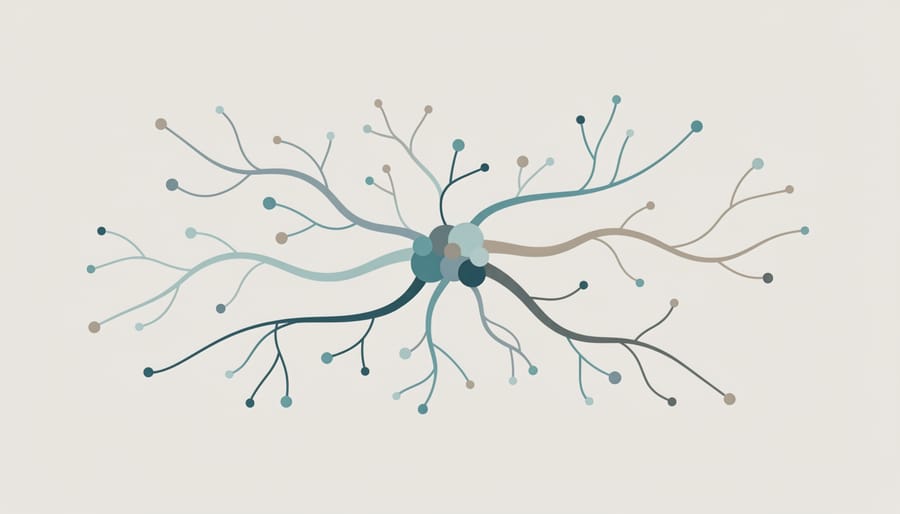
BDNF, or brain-derived neurotrophic factor, is a protein that nerve cells use to support one another. Researchers pay close attention to it because it is tied to neuroplasticity, the brain’s ability to strengthen, weaken, and rewire its connections as we learn and adapt.
Think of it like the maintenance crew for a power grid. A network only stays reliable if its lines are inspected, repaired, and reinforced where demand is highest. BDNF plays a similar part, helping neurons survive, grow, and keep their connections, called synapses, in good working order.
This is why it shows up so often in studies of learning, memory, and how the brain responds to stress or injury. Scientists generally treat BDNF as a useful marker of how well the brain’s wiring is being kept up, though its exact role in any one condition is still being worked out.
How Researchers Think Semax Interacts With BDNF

What the Laboratory Studies Report
In laboratory work, most of what researchers report about Semax comes from animal models and cultured cells rather than people. The studies typically examine brain tissue after the peptide is given, looking at whether the activity of genes involved in neurotrophic signaling changes. BDNF is the headline target, along with its receptor, often called TrkB, which acts as the docking point that lets the protein pass its message into a nerve cell.
Across these preclinical reports, the recurring theme is that Semax exposure is associated with shifts in BDNF levels or related gene expression in certain brain regions, such as the hippocampus, an area tied to learning and memory. Some experiments also describe changes in markers linked to neuron survival and the strengthening of connections between cells.
Two cautions matter when reading these findings. First, results vary with the model, the dose, the delivery method, and the timing of measurement, so one study’s pattern doesn’t automatically carry over to another. Second, a change in a molecular marker is not the same as a demonstrated benefit. It shows that something measurable happened in tissue, not that a person would think, feel, or recover differently as a result.
What We Still Don’t Know
Even with an encouraging body of laboratory work, the honest answer to “how well do we understand Semax and BDNF?” is “only partly.” Much of what we know comes from a narrow slice of the research world, and good evidence evaluation means naming the gaps plainly rather than glossing over them.
Here are the main open questions:
- Study populations tend to be small and concentrated in a few regions, which limits how far results can be generalized.
- Dosing, timing, and delivery methods (such as nasal versus injected administration) vary from one study to the next, making direct comparison difficult.
- Many reported BDNF changes come from animal or cell models, and it is unclear how closely they translate to people.
- Broad, independent replication by teams outside the original research groups is still limited.
- Long-term effects and the full range of possible side effects remain poorly characterized.
None of this means the research is unimportant. It means the findings are best read as promising leads, not settled conclusions. When protocols differ so widely, it becomes hard to say which results reflect the peptide itself and which reflect the way a particular study was designed. Larger, well-controlled trials with consistent methods, ideally repeated by independent laboratories, are what would turn interesting signals into dependable knowledge.
Where Semax Research Is Being Applied and Explored
Semax has been discussed in the research literature across a few distinct areas. These are best understood as active research directions, not established treatments, and the strength of evidence differs from one to the next.
- Neuroprotection after ischemic events: Researchers have examined whether Semax may support nerve cells after reduced blood flow to the brain; most evidence is preclinical, with some limited clinical reports from specific regions.
- Cognitive function: Studies have looked at attention, memory, and learning tasks, mainly in animal models, with only small human studies available.
- Stress response: Investigations explore how the peptide may influence the body’s reaction to stress, and this work remains largely preclinical.
- Neurotrophic signaling: Laboratory work looks at BDNF-related pathways as a possible mechanism, which is still an open question rather than a settled finding.
Notice the pattern in that list. Animal and cell studies dominate, and the human data that exists is often limited in size, geography, or independent replication. That gap is exactly why careful wording matters here.
It also helps to remember that peptides sit within different rules from country to country. Just as regulatory compliance shapes how any large energy project moves from idea to reality, regulatory oversight shapes how a compound like Semax is studied, labeled, and made available. A substance being researched or used in one country says little about its status in another.
When you come across peptide claims online, a few habits go a long way:
– Check whether the claim comes from a laboratory study, an animal study, or a human trial.
– Look for the original publication rather than a summary or product page.
– Be cautious with language that promises dramatic results or treats early findings as proven.
Articles like this one can help you understand the science, but they cannot assess your individual situation. If you are considering any health decision, please speak with a qualified healthcare professional who can weigh the evidence against your own circumstances.
The Bigger Picture: Neuroscience, Innovation, and Clear Communication
Progress in neuroscience rarely comes from a single study. It builds slowly, through experiments that other labs can repeat, open reporting of results, and a willingness to say “we don’t know yet.” Researchers, regulators, and the public each play a part, and trust grows when evidence is shared clearly rather than oversold.
That pattern will sound familiar to anyone who has watched clean energy mature. Wind projects move forward when developers, utilities, government bodies, and property owners work from the same facts and stay in conversation. Good decisions depend on partnership and on information people can actually understand.
Wind Unites Us has taken that approach since 2004, pioneering the practice of explaining complex subjects in plain terms and earning confidence through expertise. The same habit serves you well when you meet peptide claims online. Look for sources that separate laboratory findings from proven human outcomes, and lean on reliable research before drawing conclusions. Clear communication is how innovation earns its place in everyday life.
Common Questions About Semax and BDNF
What is Semax?
Semax is a synthetic neuropeptide derived from a fragment of the ACTH hormone, studied mainly in Russia for its effects on the nervous system. It is a research subject, not a general-purpose wellness product.
What is BDNF?
Brain-derived neurotrophic factor is a protein that supports the survival, growth, and connections of nerve cells. Researchers study it closely because of its role in learning and neuroplasticity.
Does Semax increase BDNF?
Some laboratory studies report changes in BDNF and related gene expression after Semax exposure. Those findings are mostly preclinical, so they don’t establish a proven benefit in people.
Is Semax approved as a medication?
It has been used and studied in some countries, while many others have not approved it as a medication. Regulatory status varies, so check current information from the relevant health authority.
How can I evaluate peptide research I find online?
Look for peer-reviewed studies, clear descriptions of dosing and methods, and independent replication. Be cautious with sources that overstate results or sell the product they’re describing.
Where can you find reliable research? Start with databases like PubMed, which index peer-reviewed journals and let you read abstracts and methods directly. Review articles can help you see how findings fit together, while primary studies show exactly what was tested and in whom.
Sound science moves the same way in every field. Transparent evidence, careful replication, and open collaboration turn early findings into trusted knowledge, and the same spirit drives scientific innovation across industries. For any health decision, a qualified professional is the right guide, not a general article.
Semax is a synthetic neuropeptide, and BDNF is the protein that helps nerve cells survive, grow, and stay connected. Laboratory studies have reported that Semax is associated with changes in BDNF activity, which is why researchers keep a close eye on the pairing. Still, what appears in cells and animals is not the same as a proven benefit in people, and that gap matters. As more independent, transparent research arrives, our understanding should sharpen. Until then, turn to qualified healthcare professionals and primary sources, not summaries alone, for any health decision.