
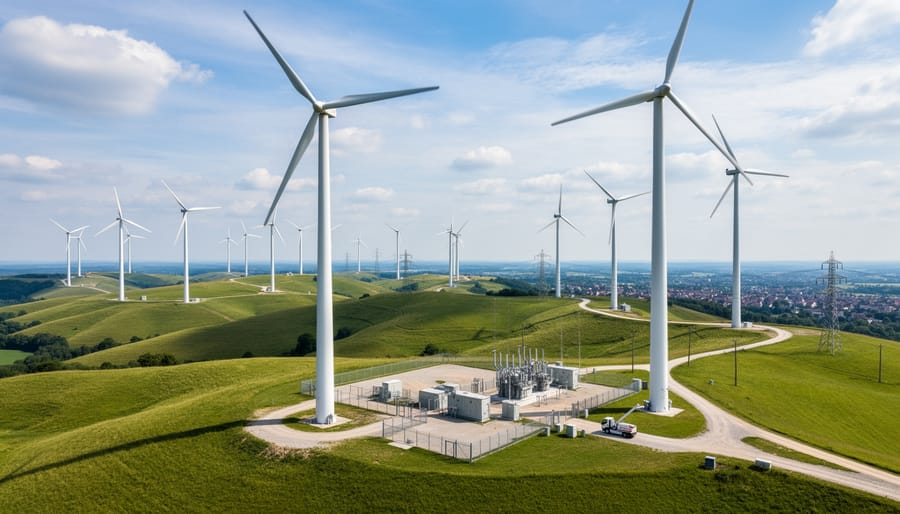
Wind power law establishes the legal framework that governs where, how, and under what conditions wind energy projects can be developed, installed, and operated. This body of regulation spans federal, state, and local jurisdictions, covering everything from environmental impact assessments and zoning compliance to grid interconnection standards and power purchase agreements. For developers, property owners, and industry partners, understanding these requirements is essential to moving projects from concept to commercial operation while protecting stakeholder interests and advancing the transition to clean energy sources.
The regulatory landscape for wind power has matured significantly as the technology has scaled. What began as limited guidance for small installations has evolved into comprehensive frameworks addressing turbine height restrictions, setback distances, noise standards, wildlife protection measures, and utility interconnection protocols. Each jurisdiction brings its own priorities to the table, creating a patchwork of requirements that varies considerably by location.
At Wind Unites Us, we work closely with utility partners and government agencies to help stakeholders interpret and comply with applicable wind power laws. Our experience across diverse regulatory environments has shown that successful projects share a common thread: early engagement with the legal framework, transparent communication with authorities and communities, and thorough documentation of compliance at every stage. Whether you’re evaluating site feasibility, preparing permit applications, or finalizing interconnection agreements, the path forward starts with understanding your rights, obligations, and the processes that govern approval.
What Wind Power Law Encompasses
Federal Regulatory Framework
Wind power projects face a layered federal framework that governs everything from environmental impact to airspace safety. The National Environmental Policy Act (NEPA) requires developers to assess a project’s ecological footprint before construction begins, ensuring that potential harm to land, water, and air quality is documented and mitigated. The Endangered Species Act adds another layer by mandating surveys and habitat evaluations to protect threatened and endangered species, failure to comply can halt a project entirely. Similarly, the Migratory Bird Treaty Act prohibits harming protected bird species, which means developers must study migration patterns, implement deterrent measures, and demonstrate that turbine placement minimizes collision risks; these NEPA and migratory bird treaty requirements often shape site selection and turbine design. Federal Aviation Administration regulations come into play whenever turbine height or location could interfere with flight paths, requiring developers to submit Notice of Proposed Construction filings and sometimes adjust turbine placement or lighting. Together, these laws ensure that wind installations meet rigorous environmental and safety standards, though they also extend permitting timelines and demand thorough documentation, a reality Wind Unites Us navigates daily by coordinating with federal agencies and building projects that balance capacity factor targets with full regulatory compliance.
State and Local Requirements
State renewable portfolio standards (RPS) establish mandatory targets for utilities to source electricity from renewable sources, directly driving demand for wind capacity installations. These state-level mandates vary considerably, some states require 50% or more renewable energy by 2030, while others set lower thresholds or adopt voluntary goals. Developers must understand their target state’s RPS requirements to assess market viability and secure power purchase agreements.
Beyond state mandates, local zoning ordinances impose the most granular controls on wind projects. Counties and municipalities regulate turbine height limits, setback distances from property lines and occupied structures, noise level restrictions, and shadow flicker parameters. Navigating these zoning compliance permits requires detailed site plans demonstrating adherence to local land use codes, often involving public hearings and conditional use permits.
Local permitting requirements extend to building permits, electrical permits, and road use agreements for construction access. Some jurisdictions impose additional conditions such as decommissioning bonds, visual impact assessments, or aviation obstruction evaluations. Coordination between state energy policy and local land use authority determines whether a proposed wind installation can proceed and at what capacity.
Eligibility Requirements for Wind Power Development
Site and Resource Requirements
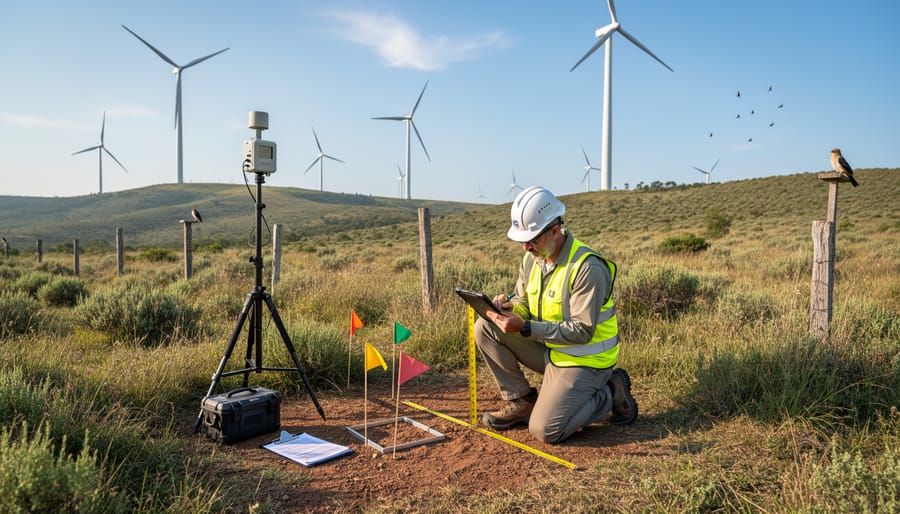
Wind power eligibility begins with measuring the wind resource at the proposed site, typically requiring average wind speeds of at least 6.5 meters per second at hub height to justify commercial development. Developers conduct multi-year meteorological studies using anemometer towers or remote sensing technology to verify sustained wind patterns and quantify expected energy production. Land area requirements vary by project scale, utility-scale installations generally need 30 to 60 acres per megawatt to accommodate turbine spacing, access roads, and electrical infrastructure, while distributed generation projects on smaller parcels require proportionally less space but still sufficient setback zones.
Geographic constraints heavily influence project eligibility. Sites must avoid protected habitats, wetlands, and areas with significant migratory bird activity that trigger additional environmental review under federal statutes. Local zoning restrictions impose minimum distances from property lines, residences, and public roads, often ranging from 1.5 to 3 times the total turbine height, and setback requirements in ordinances can effectively render otherwise suitable sites ineligible. Properties must also provide adequate transmission access within economically feasible distances, as interconnection costs escalate rapidly beyond 5 to 10 miles from existing substations. Property owners considering wind leases should understand the lease acquisition fee structure early in the feasibility assessment process.
Environmental and Community Standards
Wind power projects must demonstrate that environmental and community impacts remain within acceptable thresholds established by federal and state agencies. Under the Endangered Species Act and state wildlife protection laws, developers conduct comprehensive surveys to identify threatened species, critical habitats, and migratory pathways before installation begins. Projects cannot proceed in areas where turbine operations would jeopardize protected species or significantly degrade essential habitats without extensive mitigation measures.
Environmental impact assessments evaluate potential effects on wetlands, water quality, soil erosion, and visual landscapes. Most jurisdictions require noise studies proving operations won’t exceed ambient sound limits, typically 35 to 50 decibels at property boundaries, and shadow flicker analysis confirming neighboring properties won’t experience excessive intermittent shade.
Community impact standards focus on protecting residents’ quality of life. Projects must maintain minimum setback distances from occupied structures, often 1,000 to 2,500 feet depending on turbine size. Public health assessments address concerns about electromagnetic interference with communications equipment and property value effects. Many states mandate community benefit agreements or local hiring requirements to ensure projects provide tangible value to host communities while meeting all environmental protection thresholds.
The Wind Power Permitting and Compliance Process

Pre-Application and Site Assessment
Before submitting any formal permits, wind power developers must conduct thorough pre-application groundwork that validates project viability and identifies potential regulatory obstacles. This phase saves time and money by catching deal-breakers early.
Initial Feasibility Studies
Begin with a wind resource assessment using meteorological towers or LIDAR technology to collect at least 12 months of site-specific wind data. This confirms whether your location has sufficient average wind speeds, typically 6.5 m/s or higher, to justify development costs. Simultaneously, assess transmission line proximity, land control requirements, and preliminary construction access.
Preliminary Environmental Screening
Conduct desktop reviews of endangered species habitats, wetlands, historical sites, and migratory bird pathways using federal databases and state environmental records. This early screening reveals whether your site triggers major environmental review requirements under NEPA or state equivalents, allowing you to adjust boundaries or abandon unsuitable locations before investing in formal studies.
Early Stakeholder Engagement
Reach out to local planning departments, utility operators, and community leaders before filing applications. These informal conversations uncover unwritten concerns, clarify local zoning interpretations, and build relationships that smooth the formal review process. Many regulatory conflicts stem from surprising communities late in the process rather than engaging them from the start.
Permit Applications and Environmental Review
Federal and state permit applications for wind power projects require substantial documentation demonstrating environmental compliance and project viability. The primary federal application centers on an Environmental Impact Statement (EIS) or Environmental Assessment (EA), depending on project scale and location. You’ll submit detailed plans showing turbine specifications, site layouts, access roads, electrical infrastructure, and construction timelines. State applications typically mirror federal requirements but add specific provisions tied to renewable portfolio standards and local land use policies.
Environmental review examines impacts on wildlife, particularly migratory birds and bats, threatened and endangered species, wetlands, cultural resources, and visual aesthetics. Projects must include avian risk assessments, habitat surveys, and mitigation strategies. Federal agencies like the Fish and Wildlife Service and the Army Corps of Engineers coordinate reviews, while state environmental departments assess compliance with state environmental quality acts. Your application package should address noise modeling, shadow flicker analysis, and decommissioning plans to meet regulatory compliance 2026 standards.
Review timelines vary significantly. Federal EIS processes typically require 12 to 24 months from submission to final approval, though less complex EA reviews may conclude in 6 to 12 months. State reviews often run concurrently but can extend overall timelines if issues arise. Agencies publish draft findings for public comment periods, usually 30 to 60 days, before issuing final determinations. Incomplete applications or insufficient environmental data trigger requests for additional information, delaying approvals by months.
Interconnection and Construction Approvals
Securing utility interconnection represents a critical regulatory milestone that often runs parallel to environmental review. You’ll submit an interconnection application to the relevant transmission or distribution utility, detailing your project’s capacity, equipment specifications, and expected grid impact. The utility conducts system impact studies to determine whether upgrades are needed, then issues an interconnection agreement outlining technical requirements, cost responsibilities, and connection timelines. This process typically adds six to eighteen months to overall permitting timelines depending on queue position and grid capacity constraints.
Once environmental clearances and interconnection agreements are finalized, you’ll obtain local building permits covering foundation work, turbine installation, access roads, and electrical infrastructure. County or municipal authorities review structural plans, verify compliance with setback and height ordinances, and issue phased construction permits. Some jurisdictions require pre-construction bonds or performance guarantees. Final construction authorization comes only after all federal, state, and local approvals are in hand, third-party consultants verify baseline environmental conditions, and you’ve posted required financial assurances for future decommissioning obligations.
Rights and Obligations Under Wind Power Law
Developer and Property Owner Rights
Wind power developers and property owners enjoy several fundamental rights under U.S. renewable energy law. First, you hold the right to develop wind resources on property you own or lease, provided you meet zoning and environmental requirements. This includes installing turbines, access roads, and associated infrastructure necessary for electricity generation.
You can access federal and state incentive programs designed to support renewable energy deployment. The federal Investment Tax Credit and Production Tax Credit remain available for qualifying projects, while many states offer additional grants, property tax abatements, or accelerated depreciation schedules that improve project economics.
Grid access represents a crucial right: utilities cannot arbitrarily refuse interconnection requests from wind projects that meet technical standards established by the Federal Energy Regulatory Commission and regional transmission organizations. You have the right to negotiate fair interconnection agreements and dispute resolution if utilities impose unreasonable connection costs or delays.
Renewable Energy Credit ownership typically belongs to the electricity generator unless explicitly transferred through contract. You control these valuable credits, selling them to utilities meeting renewable portfolio standards or retiring them to claim environmental benefits. State law governs REC creation, tracking, and trading, with most jurisdictions maintaining electronic registries that establish clear ownership and prevent double-counting.
Ongoing Compliance and Operational Obligations
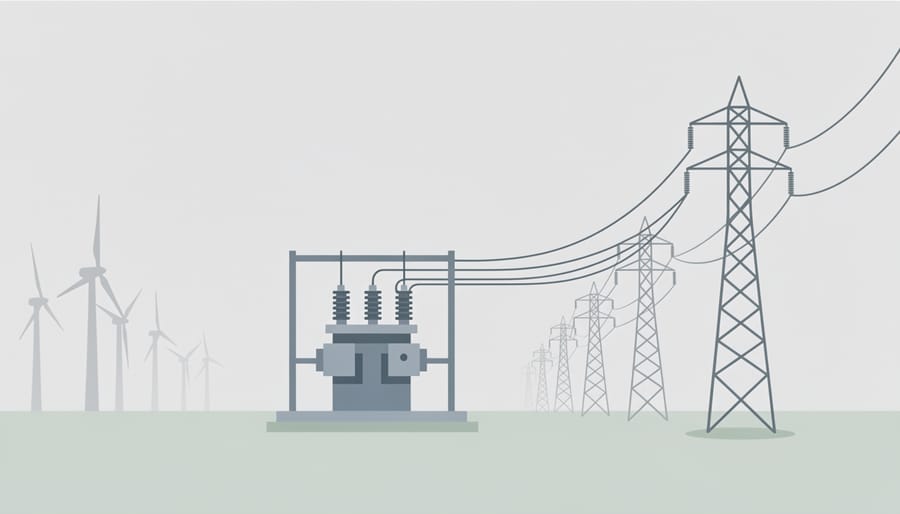
Once your wind installation receives final approval and begins operation, your legal responsibilities shift to ongoing compliance. Federal and state agencies require continuous environmental monitoring throughout the project’s lifespan, typically 20 to 30 years. You must track bird and bat mortality, document wildlife behavior near turbines, and submit annual reports to the U.S. Fish and Wildlife Service. Noise level monitoring ensures you remain within permitted decibel limits at property boundaries.
Most jurisdictions mandate quarterly or annual operational reports to state energy offices, documenting actual power generation against projected capacity. Equipment maintenance must meet manufacturer specifications and industry standards to maintain safety certifications. Any modifications to turbine height, blade length, or total capacity trigger new permit reviews.
At end of life, decommissioning obligations require you to remove all above-ground structures, restore topsoil, and return the land to its pre-construction state. Many states now require financial assurance mechanisms like bonds or escrow accounts, typically covering 125% of estimated removal costs, established before construction begins. These funds ensure proper site restoration even if the project developer dissolves or abandons the installation.
Where to Get Regulatory Help and Support
Navigating wind power regulations requires coordination with multiple government agencies and regulatory bodies at federal, state, and local levels. The U.S. Department of Energy’s Wind Energy Technologies Office serves as the primary federal resource for technical guidance, funding opportunities, and regulatory framework information for wind installations. The Environmental Protection Agency oversees environmental compliance aspects, including National Environmental Policy Act reviews and endangered species protections that affect project siting and operation. The Federal Aviation Administration manages airspace safety determinations, requiring notification for any structure exceeding 200 feet in height, which includes most utility-scale wind turbines.
At the state level, renewable energy offices and public utility commissions administer renewable portfolio standards, interconnection procedures, and state-specific incentive programs. These agencies vary significantly by state but typically handle capacity targets, grid integration requirements, and state environmental reviews. Regional transmission organizations and independent system operators provide essential support for interconnection studies and grid access agreements necessary for commercial wind installations.
- U.S. Department of Energy Wind Energy Technologies Office, technical assistance, funding programs, and regulatory guidance
- Environmental Protection Agency, environmental impact assessments and endangered species compliance
- Federal Aviation Administration, airspace safety determinations and obstruction evaluations
- State energy offices, renewable portfolio standards, state incentives, and capacity planning
- Public utility commissions, interconnection procedures and utility coordination
- Regional planning commissions, local zoning guidance and community engagement resources
- Wind Unites Us project management, comprehensive regulatory navigation from permitting through operation
Wind Unites Us leverages strong partnerships with government bodies and utility companies to streamline the regulatory process for clients. Our project management team coordinates directly with all relevant agencies, manages permit applications, conducts required environmental studies, and ensures complete compliance throughout development and operation. With 139.2 MW of installed capacity across multiple jurisdictions, we’ve established working relationships that accelerate approvals while maintaining rigorous adherence to all regulatory requirements. This comprehensive support eliminates the complexity of navigating multiple agencies independently, allowing property owners and project partners to focus on the broader benefits of renewable energy development rather than regulatory minutiae.
How to Apply or Complete the Process
Starting a wind power project means working through a multi-phase regulatory process that typically unfolds over 18 to 36 months, though complex sites can take longer.
Begin with a preliminary site assessment and feasibility study to confirm your location meets basic wind resource, environmental, and zoning criteria. Once you’ve verified viability, prepare your formal permit applications. Most projects require a state environmental impact assessment or statement, local land use permits, building permits, and FAA determinations if turbines exceed 200 feet or sit near airports.
Submit applications to the relevant federal, state, and local agencies simultaneously where possible to avoid sequential delays. Your environmental review will trigger public comment periods, typically 30 to 60 days, during which neighbors and stakeholders can raise concerns. Address comments thoroughly in your responses to regulators.
While permits move forward, negotiate your utility interconnection agreement. This parallel track determines grid connection terms, upgrade costs, and capacity allocation. Secure all approvals before breaking ground.
After construction, obtain final inspections and operational certifications from building departments, utility providers, and environmental agencies. Keep copies of all permits active throughout the project’s operational life, as periodic renewals and compliance reports are standard requirements.
What to Watch For
The regulatory landscape for wind power installations shifts constantly as federal agencies update guidance, states revise renewable portfolio standards, and local governments respond to community concerns. Three critical areas demand your ongoing attention throughout the project lifecycle.
Regulatory Timeline Changes: Permitting timelines have extended significantly in 2026 as environmental review processes incorporate expanded wildlife monitoring protocols and grid reliability assessments. What once required 18-24 months for federal approvals now frequently stretches to 36 months or longer, particularly for projects exceeding 50 MW capacity. Budget extra time and maintain regular contact with reviewing agencies to avoid costly construction delays.
Community Opposition Triggers: Local resistance often emerges late in the approval process when neighbors fully grasp a project’s scale and proximity. Proactive engagement, site tours, visual simulations, economic impact presentations, before formal applications reduces the risk of organized opposition that can stall or kill otherwise compliant projects. State law increasingly requires documented community outreach as part of permit applications.
Evolving Environmental Standards: Wildlife agencies are tightening seasonal restrictions and post-construction monitoring requirements, especially for raptor migration corridors and bat habitats. Projects approved under older standards may face new compliance obligations during operation, affecting maintenance schedules and long-term costs.
Common Wind Power Regulatory Questions
Developers and property owners commonly have questions about navigating wind power regulations. Understanding these regulatory dynamics helps set realistic expectations and prepares stakeholders for the development journey. The answers below address the most frequent concerns about compliance, costs, and timelines in 2026.
How long does the wind power permitting process typically take?
The timeline varies significantly based on project size and jurisdiction, but most wind installations require 12 to 36 months from initial application to final approval. Larger projects requiring full environmental impact statements may take longer, while smaller installations with less environmental complexity can move faster.
What are the typical regulatory and permitting costs for a wind project?
Permitting costs generally range from 2% to 5% of total project costs, covering application fees, environmental studies, legal reviews, and consultant expenses. Actual costs depend on project scale, location, and environmental assessment requirements.
How should developers handle local community opposition?
Successful developers engage communities early through transparent communication, public meetings, and addressing concerns about noise, visual impact, and property values. Many regulatory frameworks now require formal community consultation periods, making proactive outreach essential.
Have wind power regulations changed significantly in 2026?
While the fundamental regulatory framework remains stable, many states have streamlined permitting processes and updated interconnection standards to accelerate renewable energy deployment. Developers should verify current state-specific requirements, as regulatory updates continue to evolve.
The regulatory questions highlighted here represent just a fraction of the considerations developers face. Each jurisdiction brings its own nuances, which is why working with experienced partners who understand the full regulatory spectrum proves invaluable. Wind Unites Us manages these complexities daily across multiple projects and regulatory environments.
Timing concerns often drive developer anxiety, particularly when projects face investment deadlines or market windows. The permitting timeline depends heavily on thoroughness during the pre-application phase. Projects that conduct comprehensive site assessments, engage stakeholders early, and submit complete applications tend to move through review processes more efficiently than those rushing to meet arbitrary deadlines.
Cost predictability matters equally. Beyond the direct permitting fees, developers should budget for ongoing environmental monitoring, legal counsel, engineering studies, and potential mitigation measures identified during review. These expenses, while adding to upfront costs, prevent more expensive delays or compliance failures later.
Regulatory changes create both opportunities and challenges. Some recent adjustments have reduced bureaucratic hurdles, particularly for projects demonstrating clear environmental benefits and community support. Others have tightened standards around wildlife protection or setback requirements. Staying current requires either dedicated in-house expertise or partnerships with firms that track regulatory developments as part of comprehensive project management.
Navigating wind power law doesn’t have to slow down your clean energy ambitions. While the regulatory landscape is undeniably complex, spanning federal environmental statutes, state permitting frameworks, and local zoning requirements, the right partnership transforms compliance from an obstacle into a streamlined path forward.
Wind Unites Us has successfully guided 139.2 MW of installed capacity through every stage of the regulatory process, from initial site assessment to final interconnection approval. Our comprehensive project management approach means you benefit from established relationships with regulatory agencies, utility companies, and government bodies that expedite reviews and resolve issues before they become delays.
We handle the technical assessments, permit applications, environmental documentation, and ongoing compliance reporting that wind power law demands. This expertise allows you to focus on the broader goals of your renewable energy project while we ensure every regulatory requirement is met accurately and on schedule.
Whether you’re a property owner exploring wind development potential or an experienced developer expanding capacity, our team brings the regulatory knowledge and proven track record that turns complex wind power law into actionable project milestones. Let’s advance your clean energy vision together with the confidence that comes from working with industry pioneers.